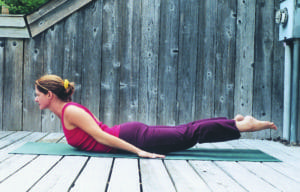
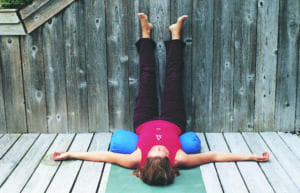
“Just as the pipes in your house get backed up, creating a flood in your kitchen sink, the pipes of your body are subject to blockage, and need to be kept clean and open.”
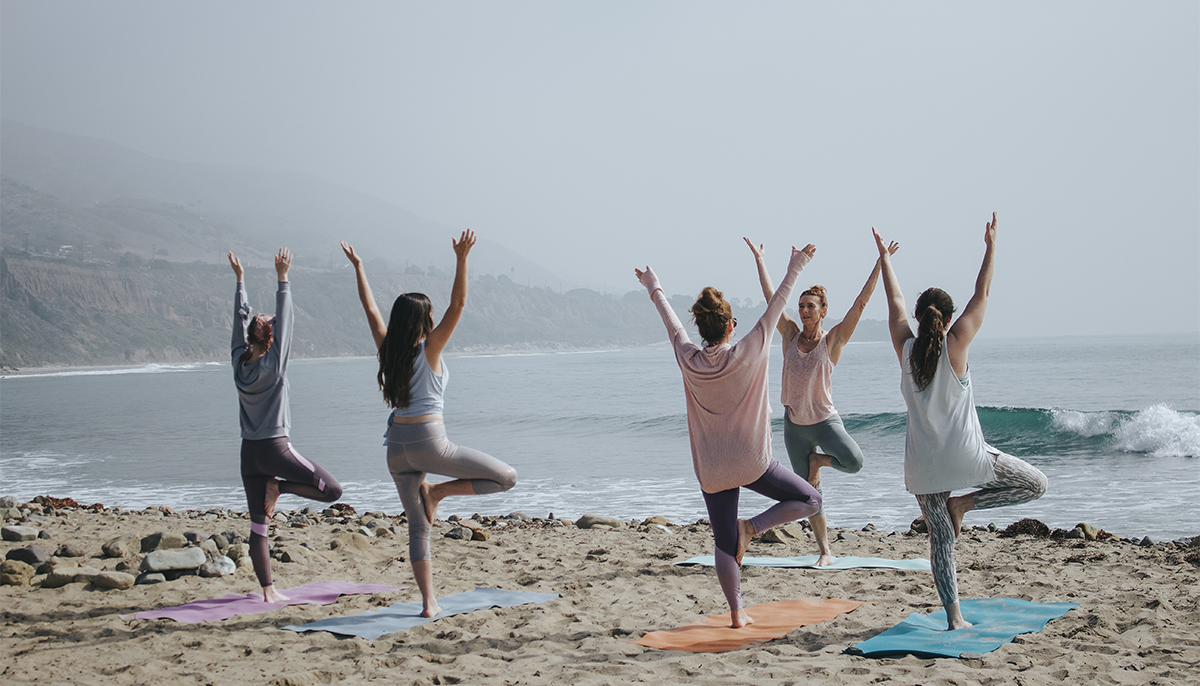
Photo by Kaylee Garrett.
Being a yoga teacher, I am fascinated by people’s bodies—their posture, their physical energy, the way they move through space. Although some people have what might be considered perfect bodies, it’s not size, shape or proportions that I notice as much as how it all works together. Is there a graceful balance of body, mind and breath? Is the rhythm of the body staccato, legato, allegro, andante or moderato? Is there support for the breath or do the ribs look like they were stuck onto the waist and hips by a kindergardener with a bottle of Elmer’s Glue?
The other day I saw a woman who was about 65, with grey hair and a rounded tummy. By Hollywood standards she was invisible, but as I watched her striding confidently down Park Avenue, exuding vibrancy with her good, strong, fluid body, I said, “I’ll have what she’s having!” The main reason I admired this woman was that her vital energy was flowing, functional and fully available to her, which allowed her to move through the world with just the right amount of effort.
Now I love a cup of coffee as much as the next person but I know that it doesn’t really give me reliable, long-term energy.
Think about plumbing. Just as the pipes in your house get backed up, creating a flood in your kitchen sink, the pipes of our bodies need to be kept clean and open or our chi (prana) will not flow. Most of us know this instinctively, but we often try to unblock our plumbing with short-term solutions such as coffee.
Now I love a cup of coffee as much as the next person but I know that it doesn’t really give me reliable, long-term energy. In fact, in the end it makes me extra tired because I continue to work at hyper-speed even after the initial rush of adrenaline has passed. When we push too hard, it’s exhausting. This begins an energetic yo-yo that can even continue into the night when I fall exhausted into bed and then wake up with insomnia at 3 a.m.
Paying attention to breathing and postural alignment creates the conditions for flowing, accessible chi, and can help equalize the droughts and floods of energy that move throughout our bodies and our days.
Alternate-nostril calming breath is called Surya Chandra Sama Vritti, which means Sun Moon Equal Fluctuation. In yoga, the left side of the body relates to the moon and is considered cooling, receptive and feminine. The right side of the body relates to the sun—heating, active and masculine. Breathing through alternate nostrils is a method for balancing these two aspects of our energy.
Paying attention to breathing and postural alignment creates the conditions for flowing, accessible chi, and can help equalize the droughts and floods of energy that move throughout our bodies and our days.
Place the first two fingers of your right hand in your palm, and bring this hand up to your nose. Touch your thumb to your right nostril and your ring finger to your left nostril. Be very gentle with your nose as you do this exercise. Try not to squish it from side to side. Begin by exhaling through both nostrils completely. Close your right nostril and inhale left for 5 counts. Close the left nostril. Lift your thumb and exhale out of your right nostril for 5 counts. Then inhale through the right nostril for 5 counts. Block the right nostril and lift your ring finger. Exhale out of the left nostril for 5 counts. Do not push the breath. Imagine that it is moving in the center of a tube without touching the sides, quiet and smooth. Repeat the entire sequence at least 3 times.
The foundation of all yogic alignment is Mountain Pose, or Tadasana. It appears to be a static pose, but on deeper investigation we discover that it is very alive. Like on a mountain there are flowing and obstructed rivers of energy, fluids and wind. There are relationships created by the topography of our bodyscape. There are slow, subtle movements that take patience to observe. Standing in Tadasana is like coming to attention by aligning your mind with body. David Crow, author of In Search of the Medicine Buddha, says, “Attention is chi.”
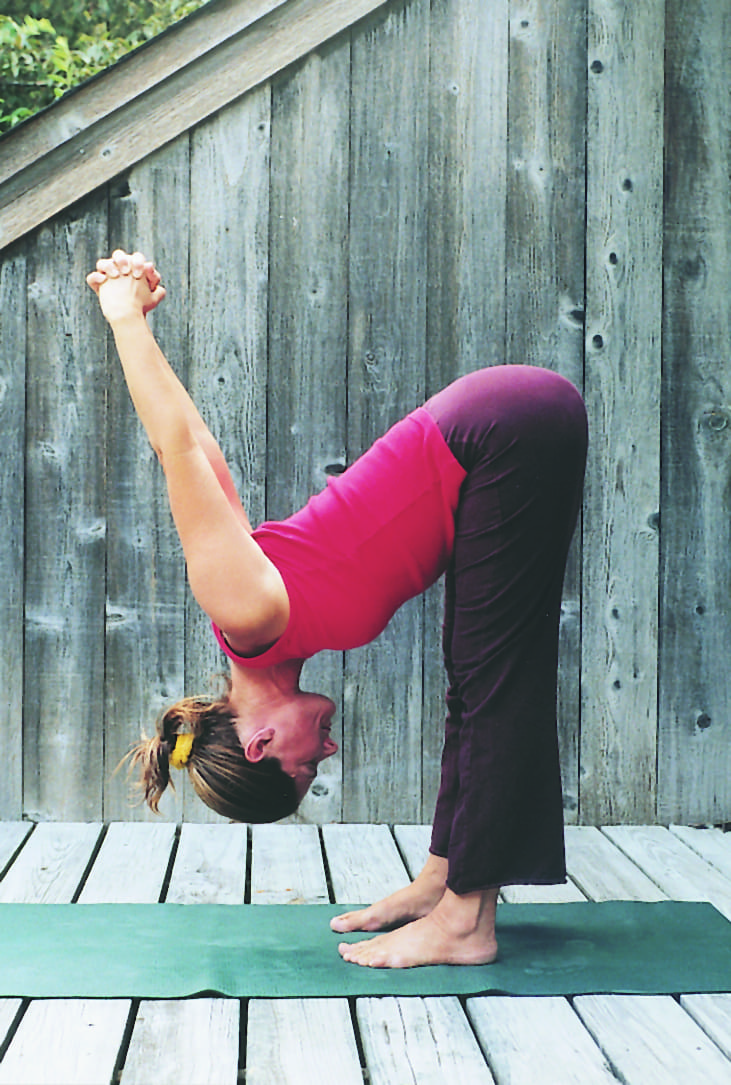
Now that you have consciously moved your breath, opened your body’s highways, and, most importantly, brought your attention to the process, let’s use those elements to inform the following yoga program.
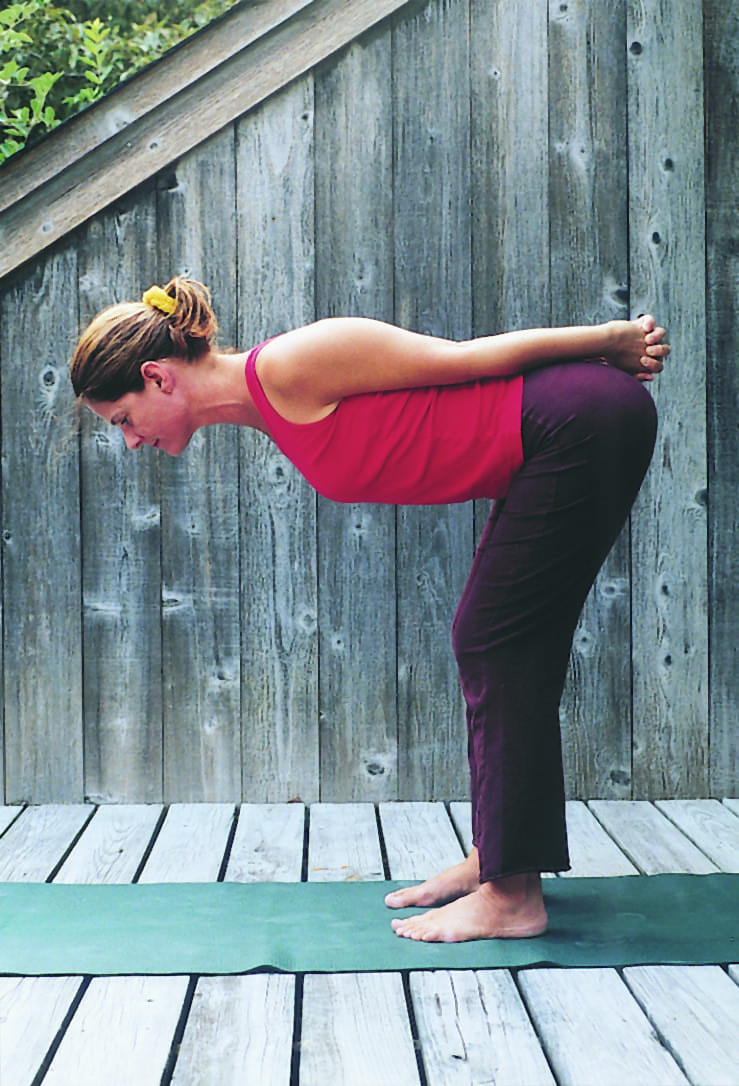
2. Standing Forward Bend with Chest Opener: Make your legs strong and active just like Tadasana. If it feels stressful on your lower back, neck or hamstrings, then bend your knees.
3. Ski Jump: Think about Tadasana as you reach the crown of your head away from your tailbone.
Alternate 2 and 3 at least 4 times. After the last ski jump, place your hands on your hips and stand up with a straight spine, back to Tadasana.
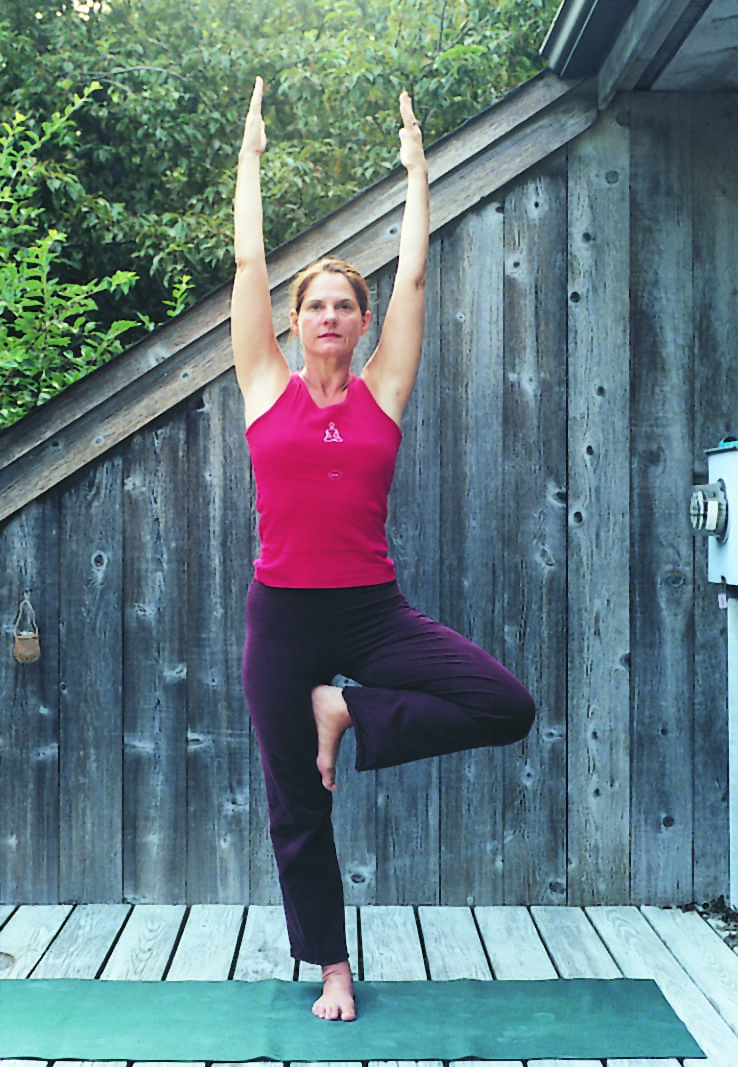
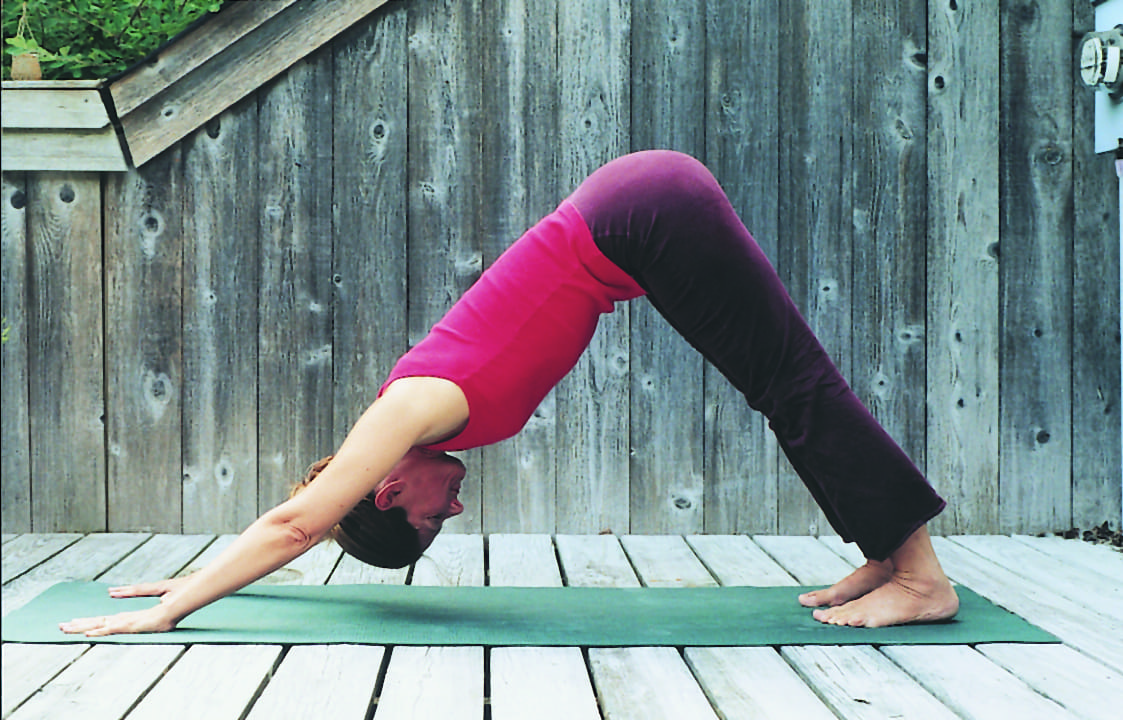
5. Downward Facing Dog: You can start on hands and knees and then lift your hips to come into this pose. Push into the ground with your arms and reach your hips in the opposite direction. This pose is just like Tadasana bent in half.